Showing posts with label art lessons.. Show all posts

Tuesday, December 2, 2014

Adaptive Art Ideas,Low Muscle Tone, Fine Motor,Visual Perception,


Quote of the Day "Art is not what you see, but what you make others see." Edgar Degas


Students creating Helen Frankenthaler inspired artworks by pouring paint onto canvas. Check out Frankenthaler's story and art at http://www.theartstory.org/artist-frankenthaler-helen.htm

I'm back with more ideas to allow for greater creativity and success for all learners. For students with disabilities art can be their main form of communication, so remove as many barriers as you can to allow for greater self-expression and communication. This blog is a resource for all of those who believe in the power of learning and art. Feel free to share ideas and ask questions or for advice on how to adapt your lessons, mediums, tools and ideas. I have witnessed in my own teaching that working through a students ability enables the learner to engage in meaningful, creative art making.

Use Soft Plastic Squeeze Bottles
Ideal for glue, paint, or drawing with paint or other mediums.


Small Containers  and Small Pieces
Having students pinch pieces out of small containers increases fine motor pinching grasp.


Tracers  Aide with Visual Perception
Use tracers to block out areas not to be painted and to contain areas being worked on. Use Bluetack or tape rolls to secure tracers.


Consider Weight  Options with Grip Strength
Use Light objects for pressing for those with a heavy press grip and weight metal objects for those with a featherweight grasp.


Keep it Simple for You and Easy for Them
Use cans, cookie cutters, lids, and containers for premade shapes.


Adapt for Each Students Needs

Pre-spread glue and press shapes onto surface.

Adapting Art Lessons


When your philosophy is to work through your students ability, you adapt your lessons by teaching to your students strengths and what skills they possess. Look at the objectives of your lesson and decide which objectives can be reached by your students with disabilities. The objectives for the the lesson below were to create a closeup composition of a musical instrument, create a background using a collage technique, and to add details using an embellishment.

On the left side is the lesson/artworks created by an able-bodied peer, meeting the lessons objectives while encouraging individual creativity.

On the right side is the adapted lesson/artworks where the student was given a choice of several guitar tracers to select from, an outline of the guitars shape was hand-over-hand drawn so the students with low-vision could easily see where to paint. The guitar was successfully painted independently by the students. Re-directing was used with the students to encourage them to fill the entire background with tissue collage. All students with disabilities demonstrated the original lessons objectives while exhibiting choice of color, shape, collage and embellishment decisions allowing individual creativity.
Adaptive Art Tracers

Guitar
Adaptive Guitar
Cello
Adaptive Guitar

Adapting Mediums


In addition to tool modifications you may want to consider adapting the medium you choose. If your student can color but exhibit difficulty grasping a crayon, adapt by thinking, would they be more successful if they used a larger or smaller crayon.  Fine motor skills can be enhanced by using smaller mini crayons or breaking regular crayons in 1/2. If grasping small objects is a challenge, try using larger crayons or specially designed crayons as shown. This is the type of thinking you must use when you consider adapting media. If painting with cotton balls or a sponge held by a clothespin results in greater creativity and control than a traditional paintbrush then proceed in that direction.
     
Adaptive Crayons
Student using adaptive crayon

Removing Obstacles


When you are working with your students think of adapting your teaching style by making everyday tasks in the art room more manageable. New tools can lead to new possibilities in the art room. However, just changing the tools may not be enough. New spring loaded scissors will be of great assistance for hands who do not have enough strength, although cutting on a line may still be difficult. Try creating a think line to cut on by using a wide marker so that it may be seen easier for students with low vision.  Allowing students to work on a larger scale also encourages greater success.


Larger grips, pencil grips and a variety of scissors are available. Student using tool adaptation and visual adaptation of large dark cutting line.

Adapting Tools


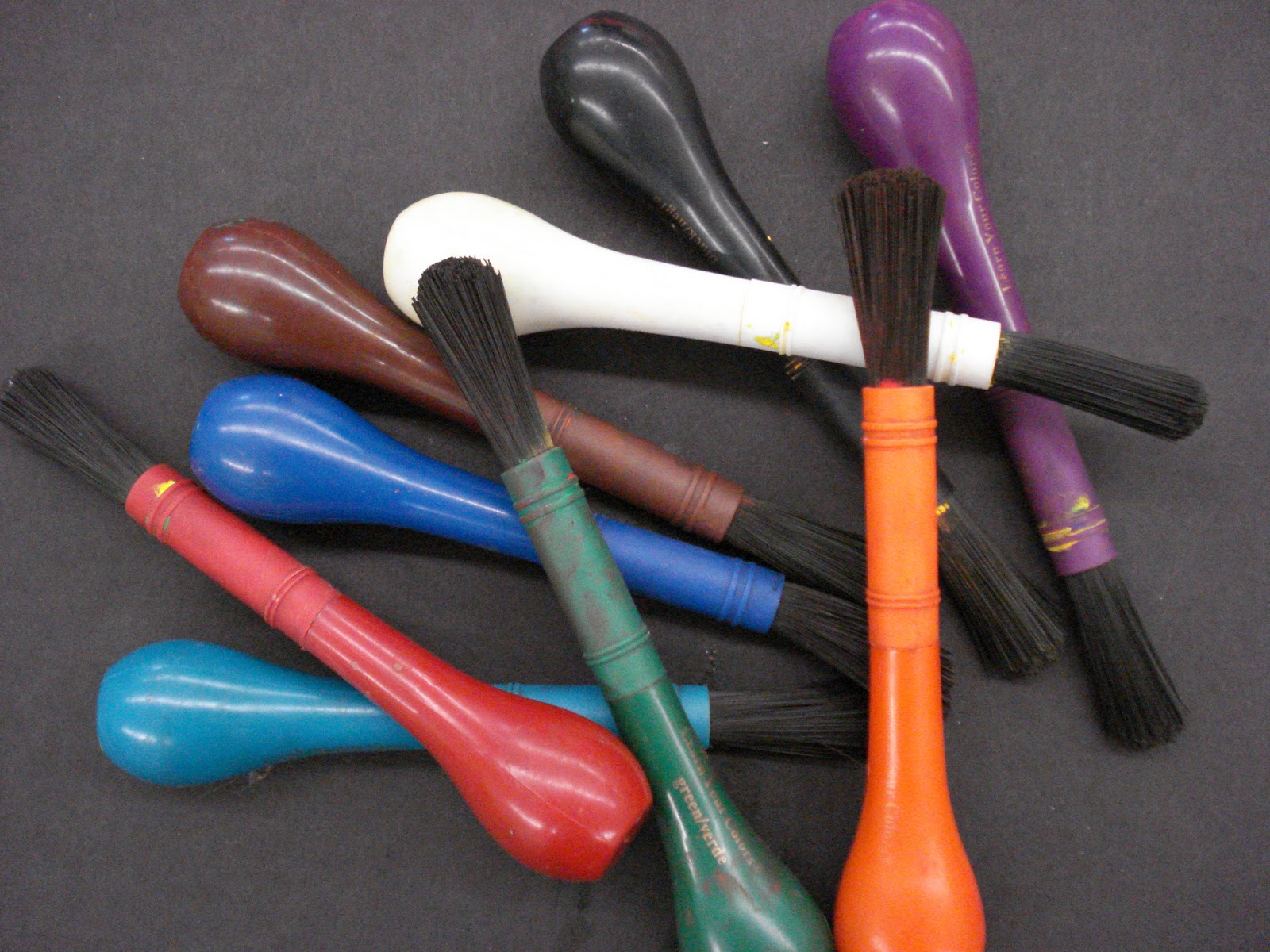
I focus on three areas for adapting art, first let's discuss tools.  Adapting the tools a enables students with disabilities to be more successful in expressing themselves artistically. There are many tools currently on the market which allow students to hold and use tools more easily which results in greater confidence and success. Many students with physical disabilities have what is referred to as a "Door Knob Grasp. "Paintbrushes with special handles purchased or created help build confidence as the student achieves better control. Here are some ideas, more tools. mediums and lesson in the next post.

Adaptive Paintbrushes Purchased or Created


Resources:  


Welcome, this blog is a creative resource of strategies for adapting art lessons for students with disabilities; the adaptations are designed to work through a students ability. By using your students strengths and looking at what they can do as opposed to can't do you are enabling your learners creativity and self-expression to develop and emerge in their artwork.

Bette Naughton